Boiling a whole chicken sounds simple, and in many ways it is — but the difference between “just cooked” chicken and tender, juicy, perfectly boiled chicken comes down to technique. Many home cooks struggle with dryness, uneven cooking, or chicken that falls apart before it even leaves the pot. I used to believe boiling was foolproof, but once I started paying attention to heat control, timing, and temperature, everything changed. When done correctly, boiling delivers soft, flavorful meat and a rich broth you can use in countless ways.
If you’re interested in understanding how simmering affects texture and flavor, you may appreciate the slow-cooking principles explained in the Cajun Chicken Soup guide on Heritage Cuisines. The same gentle-heat method used in soups is exactly what leads to perfectly boiled chicken as well.

Table of Contents
The Ingredients You’ll Need
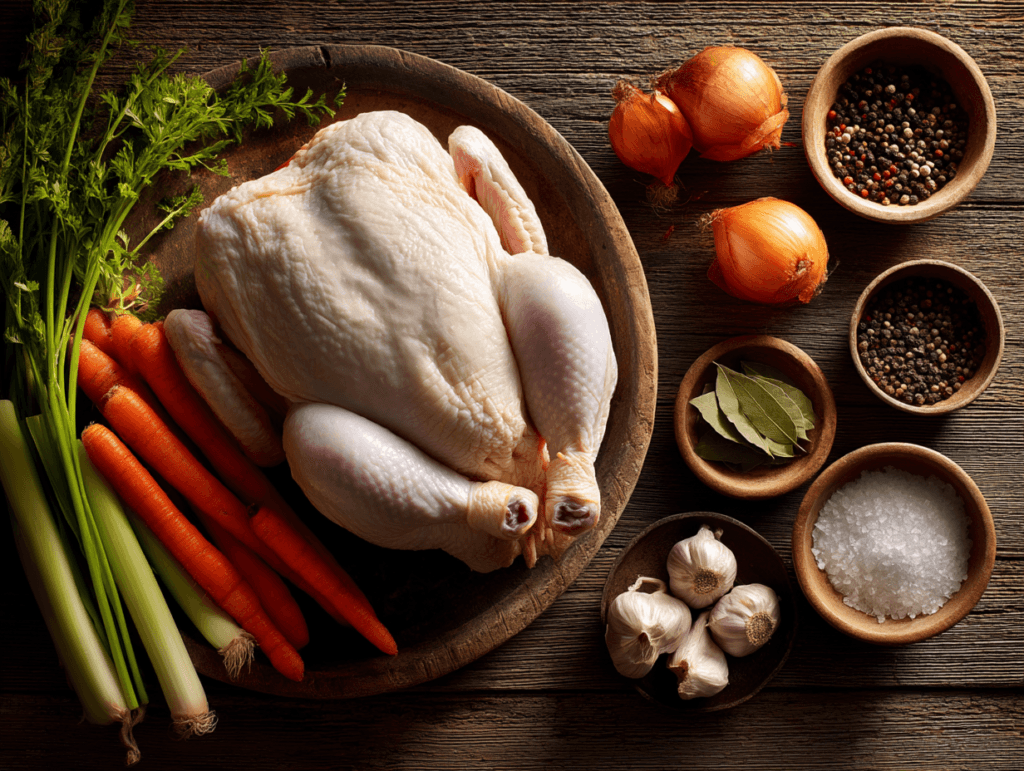
To boil a whole chicken properly, you don’t need a long list of ingredients. Instead, you only need the right tools and enough water to ensure even cooking throughout. These items are not part of a “recipe” — they are simply the essentials required for a successful boiling process.
Tools
- Large stockpot deep enough to submerge the chicken
- Tight-fitting lid to maintain steady heat
- Kitchen thermometer (essential for checking doneness)
- Tongs or a long fork
- Cutting board
- Fine mesh strainer if you want to save the broth
Basic Ingredients
- Whole chicken (fresh or frozen)
- Water
- Salt (optional for light seasoning)
- Optional aromatics: onion, garlic, bay leaf, celery, peppercorns
These aromatics enhance the broth but are not necessary for the method itself.
What Is the Boiling Method for Whole Chicken and Why It Matters
Boiling a whole chicken is more than just placing a bird in hot water. The technique determines whether the chicken cooks evenly and stays tender, or becomes dry and tough. The secret lies in heat control. A rolling boil overcooks the outer meat before the center is done. Very low heat extends cooking time too much and risks uneven doneness.
The ideal approach is a gentle simmer — small, steady bubbles. This allows heat to move through the thickest parts of the chicken without damaging the texture, ensuring even cooking from skin to bone.
Why Boiling Chicken Goes Wrong (Dryness, Tough Meat, Undercooking)
Here are the main reasons boiled chicken turns out poorly:
1. Dry, stringy meat
This happens when the water boils aggressively. High heat tightens muscle fibers and forces out moisture.
2. Rubber-like texture
This occurs when a cold chicken is dropped into boiling water. The shock causes the proteins to toughen.
3. Undercooked center
Large chickens that aren’t fully submerged or are cooked at fluctuating temperatures often remain pink near the bone.
4. Falling apart too early
If simmered too long, joints separate before the chicken reaches the perfect fall-apart stage.
These problems are easy to avoid when heat and timing are controlled properly.
How to Boil Chicken the Right Way
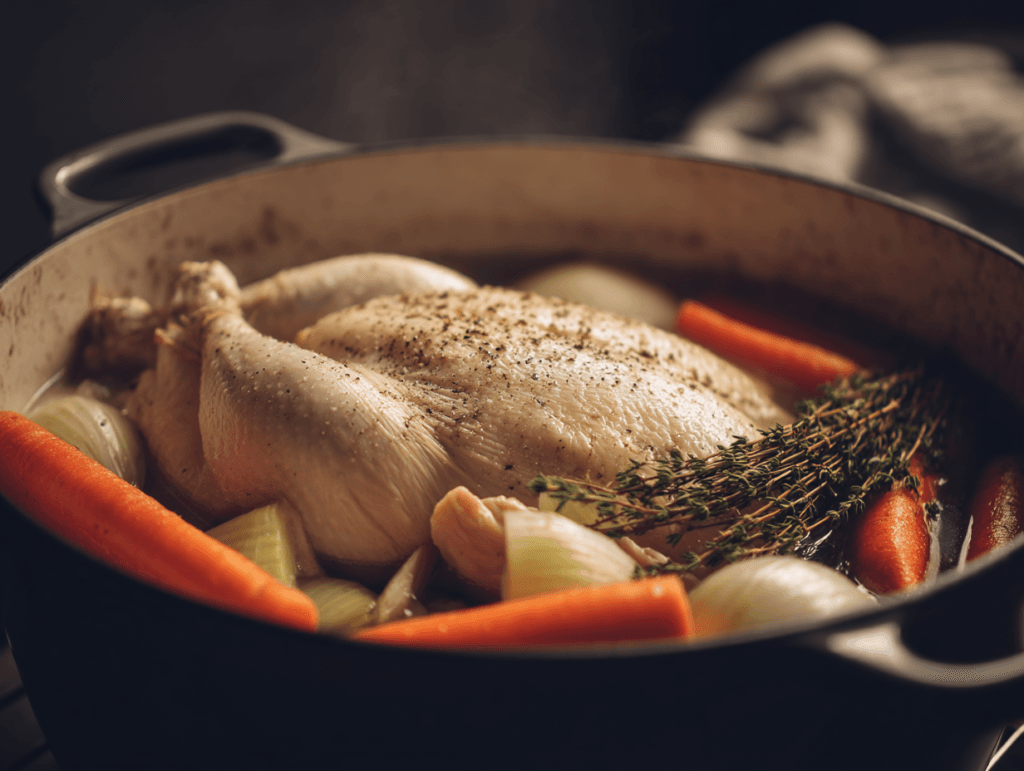
The correct technique is consistent for chickens of all sizes:
- Place the chicken in a stockpot.
- Cover completely with cold water.
- Slowly bring the pot to a gentle simmer.
- Maintain a steady simmer — avoid rapid boiling.
- Heat the chicken patiently until the center reaches a safe doneness of 165°F (74°C).
- Let the chicken rest in the hot broth for 10 minutes before removing.
This method preserves moisture and ensures even cooking.
Boiling Chicken Temperature (Safe Internal Heat Levels)
The most reliable way to know your chicken is safely cooked is to check the temperature. According to Delish – How to Boil Chicken, reaching 165°F (74°C) in the thickest part of the meat ensures the chicken is safe to eat.
Some cooks prefer allowing the thigh area to reach 175–185°F (79–85°C) for softer, fall-apart texture. Both ranges are acceptable, as long as the minimum safe temperature is achieved.
How to Make Chicken Fall Off the Bone
To achieve fall-off-the-bone tenderness, allow the chicken to simmer slightly longer after reaching 165°F. Letting it rest in the hot broth helps the connective tissues break down slowly, giving you tender meat without turning it mushy.
How Long to Boil a Whole Chicken per Pound
A simple and reliable guideline for boiling whole chicken is:
- 20 minutes per pound at a gentle simmer
- 3 lb chicken → ~60 minutes
- 4–5 lb chicken → 80–100 minutes
- 6 lb chicken → about 2 hours
These times assume the chicken is fully submerged and the heat is kept steady.
How Long Does It Take to Boil a Chicken Breast?
Chicken breasts cook much faster:
- Boneless breasts: 12–18 minutes
- Bone-in breasts: 25–30 minutes
If you’re planning to shred the chicken, allowing it to simmer a bit longer will soften the fibers.
How Long to Boil a Whole Frozen Chicken
Boiling a frozen whole chicken is safe but takes longer because the heat must thaw the bird first.
General timings:
- 3-lb frozen chicken → ~90 minutes
- 4-lb frozen chicken → ~120 minutes
- 5–6 lb frozen chicken → 2.5 hours or more
No matter the weight, always confirm doneness with a thermometer.
Now that the fundamentals of boiling a whole chicken are clear, it’s time to focus on the practical mistakes, safety guidelines, and essential checks that ensure the chicken turns out juicy, tender, and fully cooked every time. Many home cooks assume chicken is done when it “looks white” or “starts falling apart,” but these signs can be misleading. The goal of this section is to help you recognize reliable indicators of doneness, prevent dryness, and understand the deeper logic behind safe boiling.
The Gentle-Simmer Approach for Perfectly Boiled Chicken
One of the most effective ways to achieve tender boiled chicken is by maintaining a consistent, gentle simmer. High heat creates aggressive bubbles that disturb the structure of the meat, causing toughness or uneven cooking. A low and steady simmer allows the chicken to heat evenly from the inside out.
This method also enhances the juiciness of the chicken because the slower temperature rise prevents the muscle fibers from contracting too quickly. If you’re unsure how long to boil a whole chicken, this slow-simmer method helps ensure the meat cooks fully and stays moist with better flavor retention.
Common Mistakes People Make When Boiling Chicken
Even experienced cooks make errors that affect texture and flavor. Here are the most common issues:
Using heat that’s too strong
Rapid boiling causes the exterior to overcook before the interior reaches a safe temperature.
Not using enough water
The chicken must be fully submerged. If parts of the bird are exposed, they will cook unevenly.
Skipping the thermometer
Relying on appearance alone can lead to undercooking. Pink spots near the bone may remain even when the surface looks done.
Moving the chicken too early
Shifting or lifting the chicken before it stabilizes will cause tearing and moisture loss.
For an example of how heat control directly affects poultry texture, refer to the method behind the Copycat Chipotle Chicken recipe, where controlled heat produces tender, flavorful chicken even without boiling.
How to Know When Chicken Is Fully Cooked
The most accurate way to check doneness is through temperature rather than visual cues or timing alone. Insert a kitchen thermometer into the thickest part of the thigh or breast. The chicken is safely cooked when it reaches 165°F (74°C).
Relying on color alone can be misleading, as explained in Mashed – How To Really Tell If Your Chicken Is Cooked Properly. Chicken can appear white on the surface yet remain undercooked near the bone. Understanding how long to boil a whole chicken becomes easier when you focus on temperature rather than appearance.
Secondary visual signs include:
- Clear juices running from the meat
- No red spots around joints
- Smooth separation of meat from the bone
These signs help confirm doneness but should always support a thermometer reading—not replace it.
How Long to Boil a Whole Frozen Chicken
Frozen chicken naturally requires more time to cook because the cold core delays heat penetration. A frozen bird also retains more moisture, so simmering helps the meat soften gradually.
Here are typical time ranges:
- 3-pound frozen chicken: about 90 minutes
- 4–5 pound frozen chicken: 2 hours
- 6-pound frozen chicken: 2.5 hours or more
Always confirm internal temperature after simmering. Frozen chicken is safe to boil, but patience is essential for even cooking.
How Long Does It Take to Boil Chicken Breast?
Chicken breasts cook faster than whole birds and require a gentler touch to prevent dryness.
Typical times:
- Boneless breast: 12–18 minutes
- Bone-in breast: 25–30 minutes
Allowing breasts to rest in hot broth for a few minutes improves texture. Avoid boiling aggressively, as breasts are prone to overcooking.
Why Boiled Chicken Sometimes Turns Out Dry
Dryness occurs when muscle fibers contract too quickly due to high heat. Moisture escapes, leaving the meat stringy. Another cause is removing the chicken from the broth too soon—without letting it rest and reabsorb juices.
If you struggle with dryness in other cooking methods, the approach in recipes like Easy Air Fryer Chicken Wings can give you insight into how heat affects moisture retention. And this is exactly why many cooks wonder how long to boil a whole chicken without drying it out — the timing affects tenderness more than any other factor.
Why Resting the Chicken in Broth Makes a Difference
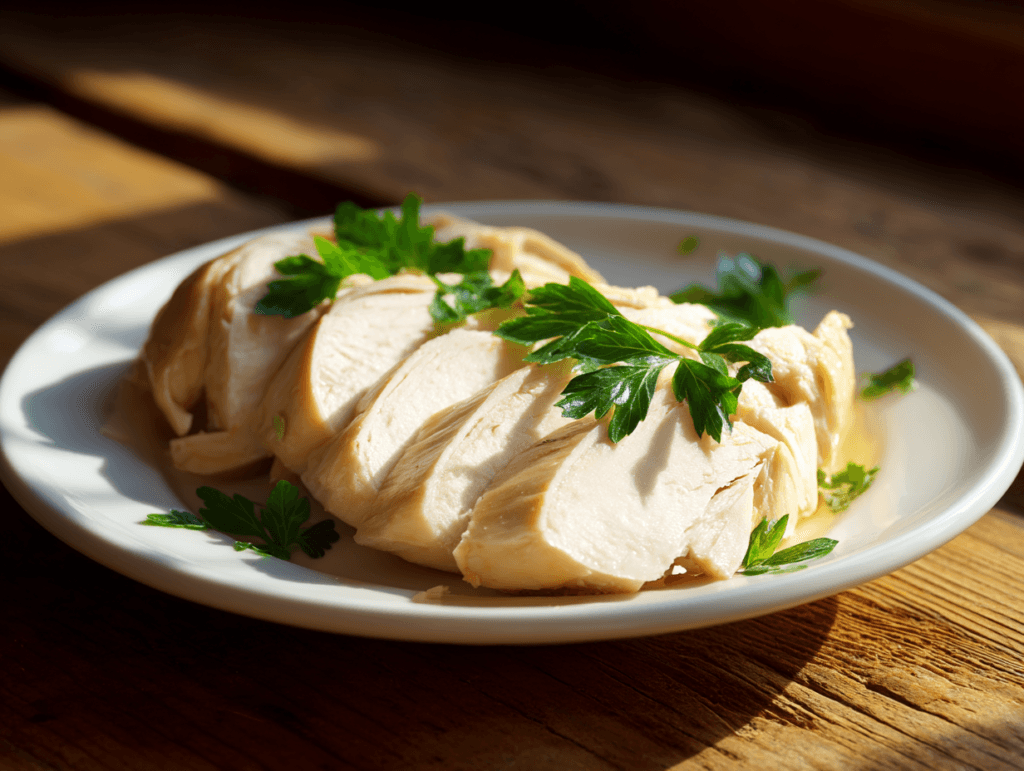
Resting the chicken in its broth after reaching 165°F is essential. This allows the internal temperature to settle and moisture to redistribute evenly. Resting also helps prevent tearing when you lift the chicken from the pot.
Allow at least 10 minutes of resting time before carving or shredding.
Storage and Food Safety Guidelines
Proper storage extends freshness and prevents foodborne illness:
Refrigerator:
Cooked chicken lasts 3–4 days in airtight containers.
Freezer:
Boiled chicken can be frozen for up to 3 months.
Reheating:
Always heat to 165°F (74°C) again before consuming.
Use broth or steam to prevent dryness.
Frequently Asked Questions
Can you boil a frozen whole chicken?
Yes. Increase cooking time by 50% and always rely on a thermometer to confirm doneness.
What bacteria cannot be killed by cooking?
Some toxins produced by Staphylococcus aureus survive heat, which is why safe storage and handling are just as important as cooking temperature.
How do you know when chicken is done boiling?
Check with a thermometer. The thickest part should reach 165°F (74°C). Clear juices and non-pink areas near the bone help confirm doneness.